AOL News has a new home! The Huffington Post.

Click here to visit the new home of AOL News!

Hot on HuffPost:

See More Stories
Nation

Some Doubt FBI Line That Scientist Sent Anthrax Letters

Feb 25, 2010 – 12:07 PM
Text Size
Allan Lengel

Allan Lengel Contributor

(Feb. 25) -- Not everyone is buying the FBI's finding that government scientist Bruce Ivins was the anthrax killer.

The Justice Department, FBI and U.S. Postal Inspectors announced Friday that they were closing the case and released a 92-page report explaining why Ivins, who killed himself in 2008, was the culprit.

Jeffrey Adamovicz, the former chief of bacteriology for the U.S. Army Medical Research Institute for Infectious Diseases in Frederick, Md., where Ivins worked, wrote the Frederick News Post expressing serious misgivings about the FBI findings that Ivins sent the deadly letters that killed five and sickened 17 others in 2001.
Bruce Ivins in 2003
Handout, AFP/Getty Images
Three government agencies recently released a report laying out their case against Bruce Ivins in the 2001 anthrax attacks. But a New Jersey congressman said the government's evidence against him is "barely... circumstantial."

"The evidence is still very circumstantial and unconvincing as a whole," Adamovicz wrote in an e-mail to the paper. "I'm curious as to why they closed the case while the [National Academy of Science] review is still ongoing. Is it because the review is going unfavorable for the FBI?"

The academy is reviewing the validity of the science used by investigators in the case, but does not plan to say whether Ivins did it or not.

Ivins committed suicide from an overdose of Tylenol as federal investigators were focusing on him and preparing to file an indictment in the lengthy probe known as the Amerithrax investigation. Charges were never filed.

His death came about a month after the Justice Department agreed to pay an out-of-court settlement valued at $5.85 million to scientist Steven Hatfill, who had long been the key suspect in the case. Hatfill had sued the Justice Department, which had labeled him "a person of interest." He alleged that the federal government went on a smear campaign and leaked information that was damaging to his reputation.
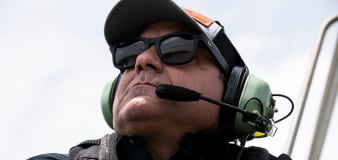
The government, after several years, conceded that Hatfill was not involved in the case.

Interestingly, in the earlier years of the anthrax probe, the head FBI investigator at the time felt he had enough circumstantial evidence to indict Hatfill. But the U.S. Attorney's Office in Washington balked, reasoning that there were far too many holes in the case.

Adamovicz wasn't the only person of note to express skepticism in the wake of Friday's report.

Rep. Rush D. Holt, D-N.J. , who is a physicist, and who presides over a congressional district where the anthrax letters were sent, issued a statement expressing doubt.

"This has been a closed-minded, closed process from the beginning," Holt said. "Arbitrarily closing the case on a Friday afternoon should not mean the end of this investigation. The evidence the FBI produced would not, I think, stand up in court. But because their prime suspect is dead and they're not going to court, they seem satisfied with barely a circumstantial case."

Holt added that "the National Academies of Science review of the FBI's scientific methods in this case won't be released until summer, but the FBI doesn't seem to care."

The FBI has said it believes strongly in its conclusion.

"The report is based on nearly 3,000 pages of documents that have been made public," Michael Kortan, the chief FBI spokesman in Washington told AOL News.

The three agencies said Friday, in announcing their findings, that, "The Amerithrax investigation found that the late Dr. Bruce Ivins acted alone in planning and executing these attacks."

The summary portrayed Ivins as a psychologically tormented man who had a long-time obsession with a sorority in New Jersey, not far from the mailbox that was used to mail the anthrax letters. It said he had devoted his entire career to the anthrax vaccine program, which seemed to be failing -- that is, until the anthrax attacks. Then it was "suddenly rejuvenated."

The report also said Ivins made unexplained and suspicious visits to the lab in Frederick, Md., late at night and on weekends around the time of the attacks. It said he had never worked those hours before or after the anthrax attacks. When confronted about the "suspicious hours," he could provide no legitimate explanation, the report said.

Authorities laid out other details in the report, including an FBI theory that Ivins had embedded a secret scientific code in the mailed letters that was a reference to two colleagues he had been obsessed with. And it said he had access off hours to a lab room that had all the "necessary tools to grow, harvest, and purify the anthrax, as well as to the equipment capable of performing the forbidden function of drying the anthrax."

Ivins denied to investigators that he was capable of producing such sophisticated and high-quality anthrax spores as those that were used in the letters. But the report said his lab notes suggested that he in fact "could, and did, create spores of the concentration and purity of the mailed spores."

Gerry Andrews, another former chief of bacteriology at the lab in Frederick, said it wouldn't have been unusual for Ivins to work odd hours because he was working on experiments with animals and he could get more done at certain times, according to the Frederick News Post.

" The FBI, I think, is trying to give folks the wrong impression of the timeline" to make their case against Ivins more convincing, Andrews said, according to the Frederick News Post.

"Bruce didn't have the skill to make spore preps of that concentration," Andrews said. "He never ever could make a spore prep like the ones found in the letters."
Filed under: Nation, Crime, Top Stories
Follow us on Facebook and Twitter.


2011 AOL Inc. All Rights Reserved.
LifeLock

ON FACEBOOK