Citing evidence gathered by new forensic tools and long-term field studies in the region, the researchers lay out their argument in a paper in the March 12 edition of the journal Science. They present a scientific case for not only keeping the ban on ivory trade intact but also for strengthening enforcement -- especially in Tanzania and Zambia, the two nations requesting the sale.
The African elephant population is dropping severely, from 1.3 million in the 1970s to about 500,000 today. Poaching continues to cut the numbers by 8 to 10 percent a year. Given a natural population growth rate of only about 6 percent, this is not an auspicious trend.
"It's not sustainable at all," says University of Washington conservation biologist Samuel Wasser.
The decline in the number of elephants could provoke massive change in the area, the scientists explain. "Elephants are ecosystem engineers," says Katarzyna Nowak, an evolutionary biologist at Princeton University. "They maintain open habitats and increase habitat diversity for other species."
Forest elephants, for example, disperse the seeds of large, canopy-forming trees. They eat the fruit and then -- as they roam across large distances in search of further sustenance -- spread the seeds through their dung. The Central African forests are the second most important carbon-capture forests in the world, and those elephants keep them healthy, the scientists say.
Without proper seed dispersal, inferior trees arise, only to fall prey to parasites and other threats. "It may be in 10 to 20 years that the entire structure of the Central African forests changes," Wasser says. "It could have huge impacts on climate."
Wasser and his colleagues cite several such habitat- and climate-related reasons for protecting elephants, but they also hope to use science to cut down on illegal trade. The origins of the illegally traded tusks are no mystery -- using "CSI"-like tools, Wasser can actually trace them back to specific regions.
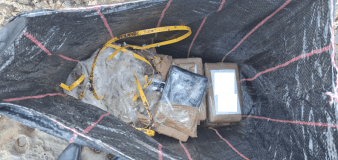
Typically, when Interpol seizes a shipment of contraband tusks, the agents send Wasser's labs fragments of each one. Wasser and his group analyze the DNA in each sample and then match that data to geographic maps of elephant gene frequency distributions across Africa. "We can say where an animal was actually poached," he says.


Trade in illegal ivory is an enormous market -- Wasser says some of the seized shipments would be worth $20 million -- and his DNA forensics work has enabled him to pinpoint Africa's poaching hot spots. "It's become quite clear that the biggest, most important sources of illegal ivory are Tanzania and Zambia," he says.

Although Wasser and his colleagues understand the need for revenue, he argues that these nations should not be allowed to sell their stockpiles if they don't even control poaching within their borders -- a prerequisite for the right to these sales.
"There are a lot more important things going on here," he says. "The ecological health of the world is at stake."