TV Show Videotaped Raid That Killed Detroit Girl
"The videotape shows clearly that the assistant police chief and the officers on the scene are engaging in an intentional cover-up of the events," Geoffrey Fieger, the family's attorney, told The Associated Press. He filed the suit today in U.S. District Court, alleging police needlessly threw a flash grenade into the home, burning Aiyana before she was shot.
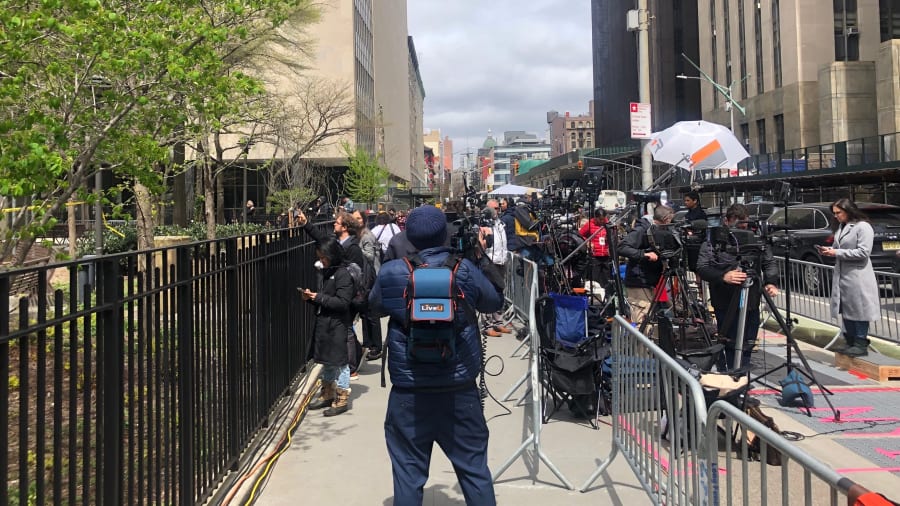
A video filmed by the crew of A&E's reality-TV show "The First 48" captured the raid, which set out to arrest a murder suspect but ended with Aiyana's death.
The crime show regularly follows the Detroit police as they investigate murders in the city and was on hand with the department over the weekend to film the attempted arrest of a homicide suspect. But the raid went poorly, and now the TV show that recorded it is becoming a central part of the story.
The events that led to the child's shooting death are in dispute, and footage of the video may help determine whose side of the story is accurate.
Witnesses told The Detroit News that about 20 officers were at the scene when an officer threw a flash grenade, meant to disorient suspects, into the home.

At a news conference Sunday, Assistant Detroit Police Chief Ralph Godbee said officers then entered the home, and, after an altercation with Aiyana's grandmother, one of the officers accidentally discharged his weapon, hitting Aiyana in the neck and killing her. That officer, who has not been identified, is on paid administrative leave until the investigation is complete.
"This is any parent's worst nightmare. It is also any police officer's nightmare. And today this nightmare is all too real," Godbee said.
But the Jones' attorney said the video proves that the Detroit police actually shot and killed Aiyana through the window of her home and are involved in a cover-up.
"Aiyana Jones was shot from outside on the porch," Fieger told the AP. Fieger said the accounts of the incident offered by Detroit police are "utter fabrications."
The Michigan State Police and the Detroit Board of Police Commissioners are both using the tape to investigate.
"We want to see if the proper procedure ... was used, and what measures can be instigated with regard to policy development that can minimize future incidents like this," Mohamed Okdie, head of the Board of Police Commissioners, told The Detroit News.
With the advent of YouTube, it is no longer unusual for video recordings to alter the outcome of a high-profile investigation. Earlier this year, police in Maryland dropped charges against two University of Maryland students after a video emerged of the officers beating the students seemingly without provocation.
But while A&E's video in Detroit may help investigators piece together what happened, some fear the network's cameras themselves may have contributed to the 7-year-old's death.
Some, including one former attorney for Aiyana's family, believe the presence of the reality-TV show crew may have encouraged police officers to act with more bravado than necessary. Attorney Karri Mitchell, who was replaced by Fieger, said the police "were excited; they were on TV."
Mitchell told The Detroit News that the TV show's need for drama may have inspired the officers to act with too much force.
"They didn't have to throw a grenade through the front window when they knew there were children in there," she said.
But Steven Chermak of Michigan State University, a criminal justice professor, said he doesn't think the cameras would cause officers to act differently.
"I don't think it would be a distraction," Chermak told The Detroit News.
For better or worse, the cameras of "The First 48" seem to have become a part of the activities of the Detroit police. On its website, the show promises to take viewers "behind the scenes of real-life investigations with unprecedented access to crime scenes, autopsies, forensic processing and interrogations."