DETROIT -- It is a geographical quirk that Detroit, Mich., USA, is located north -- not south -- of Windsor, Ontario, Canada. But this was appropriate in the upside-down world of Bob Probert, the hockey ruffian who died between the shore lines of those two nations on Monday at age 45.Probert suffered chest pains while boating on Lake St. Clair and could not be revived on the Canadian side, his family and local authorities said. The lake, part of the international border, links to the Detroit River that flows alongside Joe Louis Arena, where Probert became a peculiar sort of star and a symbol of an era for the Red Wings.
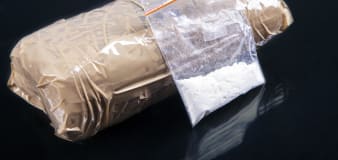
Probert was a local boy who made good and did bad things and always seemed adrift, never on firm ground. He grew up in Windsor, the troubled son of a troubled cop, and achieved stardom by policing the National Hockey League ice of the Motor City with his fists. No player of his generation punched better than Probert and few carried more demons away from the rink, including alcohol abuse. Perhaps Probert's most famous transgression was his arrest for trying to smuggle about half an ounce of cocaine across the border in his undershorts.
It happened not far from Joe Louis, the rink, and just down the street from the 8,000-pound Fist monument that honors the boxer Louis. I remember covering Probert's bust for the Detroit Free Press on a snowy March day in 1989. After his booking, Probert came down the steps of the U.S. federal courthouse wearing an open overcoat and a bemused expression. He never feared doing time in the penalty box. Probert then said a few noncommittal words to us and was whisked away. He spent three months in federal prison and 3,300 minutes in penalty boxes in an NHL career that ended with Chicago in 2002.
Share After leaving the Red Wings in 1994, it always seemed as if another disturbing Probert story was just a news cycle away. There were occasional and troubling reports of Probert in bar fights and of Probert in a motorcycle crash and of Probert violating probation and of Probert in a battle with police involving stun guns and tasers in a neighborhood known for drugs. The circumstances of his death Monday seemed almost counterintuitive: Probert was with his four children and his wife's parents at the end of a long weekend that honors Canada Day on July 1 and Independence Day on July 4.
As a Red Wing, Probert was a cult figure for a franchise just beginning to build a hockey powerhouse after two decades of mismanagement. Fans nicknamed Probert and Joey Kocur "The Bruise Brothers;'' they were a tag-team act in a sport that sanctions fights as a quasi-legal side show. To games at Joe Louis Arena, fans wore T-shirts that showed a red cross and the words: "Give Blood, Fight Probie.'' Before the Internet and YouTube, Probert's fight tapes were prized among traders of bootleg videos, suitable for bachelor parties or fraternity houses. Perhaps the most memorable can be found through Internet search engines as "Hockey Fight: Probert vs Domi Rematch.''
It was his second bout with Tie Domi of the New York Rangers, staged in December of 1992 at Madison Square Garden, that old boxing mecca. The video shows Probert throwing about 45 punches in about 45 seconds, most of them right hands and many of them landing. The replay right afterward shows Steve Yzerman --then the Wings captain, now the general manager of Tampa Bay -- mocking Domi by pretending to put on the heavyweight championship belt that Domi had claimed in a prior battle. In the big scheme of hockey's vigilante justice, Probert was there to protect the superstar Yzerman; and Yzerman was honoring his teammate and his role.One of the Big Myths in sports spread by the media is that "hockey goons are really the nicest guys in sports.'' A few may indeed be friendly, but the role often attracts large, violent young men from disturbed homes who channel their aggression into a sub-genre of a sport for personal profit and public amusement. When they are used up, like all athletes, they are cast aside.
At least Probert's life did not end like that of the enforcer John Kordic, who died after a fight with police in Quebec City. Compared to that, Probert's demise was almost mercifully mundane. As was the case after the death of Mark (The Bird) Fidrych of the Detroit Tigers in 2009, Probert's passing will bring the blur of nostalgia and sentimentality in the region. Fans in Detroit and Windsor will mourn Probert and their stories of him will flow like tears from eyes or blood from a cut or water of a river current moving away, so swift and strong and soon gone.