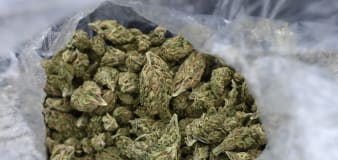
Last week Anthony Ward, manager of the hedge fund Armajaro Holdings, made a big bet on the rising price of chocolate by picking up about $1 billion worth of cocoa beans. And in a departure from business as usual, where traders simply trade the rights to buy or sell commodities at a certain price in the future, Ward had all 240,000 tons physically delivered to Armajaro.
World chocolate prices have more than doubled in the past two years, and poor harvests in Ghana and the Ivory Coast have further squeezed supply. Some analysts now worry that Ward's purchase is an attempt to gain enough power to manipulate the market.
"If it looks like cornering, feels like cornering, it probably is cornering," Eugen Weinberg, an analyst with German financial institution Commerzbank, told the Telegraph.
Some have noted that Ward made a tidy profit off poor African cocoa bean harvests in 2006 with a similar deal, clearing about $60 million off a purchase of 200,000 tons.
But according to the BBC, there's nothing illegal about Ward's reputed efforts to corner the cocoa market. While President Barack Obama's financial reform may be making an attempt to curb speculation in America, in Europe there are no limits on how much of a commodity one can buy.

In one case, the product was changed to the point where even the use of the term "chocolate bar" was called into question: After replacing cocoa butter with vegetable oil in 2008, Hershey had to change some product descriptions to "chocolate candy" or just the adjective "chocolaty."
The gradual price increase of cocoa beans is also part of a more troubling global trend in food prices. A recent U.N. report estimates that rising fuel costs could lead to some grain prices rising 15 to 40 percent over the next decade, raising serious questions about the stability of countries where people are already struggling to afford enough to eat.

Former Miss America Draws Buzz As Potential McConnell Challenger