AOL News has a new home! The Huffington Post.

Click here to visit the new home of AOL News!

Hot on HuffPost:

See More Stories

Surge Desk

What Exploded Off Vermilion Bay: An Oil Rig or a Platform?

Sep 2, 2010 – 3:51 PM
Text Size
David Knowles

David Knowles Writer

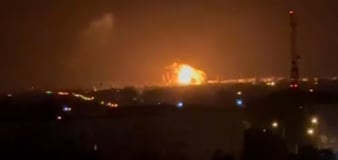
(Sept. 2) -- As news broke on Thursday of yet another explosion in the Gulf of Mexico, several media outlets proclaimed that an "oil rig" had gone up in flames, echoing the devastating accident at BP's Deepwater Horizon rig. But as the story unfolds, the U.S. Coast Guard is taking pains to draw a distinction between oil rigs and oil platforms.

"It's an oil platform, not a drilling rig," Coast Guard Chief Petty Officer Masachi told Surge Desk on Thursday. The difference, according to Masachi, is that the structure owned by Mariner Energy was used for processing oil, not drilling it.

But according to Mariner Energy itself, the structure in question -- located on what's known as Vermilion Block 380 -- produced "9.2 cubic feet of natural gas, and 1,400 barrels of oil" in the last week of August. So if the company says that oil was being recovered on the structure as recently as last week, what explains the Coast Guard's insistence on using the term "oil platform"?

Surge Deck explains, via the help of an expert.

Oil Rigs vs. Oil Platforms

"We're talking about industry terms," Dave Rensink, President of the American Association of Petroleum Geologists told Surge Desk. "For the general public, oil rig and oil platform are used interchangeably."

Rensink detailed the evolution of shallow-water structures like the one that exploded today 90 miles off the coast of Vermilion Bay, La. "First you have discovery, then you move on to development, or drilling, and finally you get to production."

Sponsored Links
Drilling rigs, the apparatuses used to bore a hole into the ground and create an oil well, are removed from an oil platform once the production phase begins, as was the case with the Vermilion Bay location.

Though Mariner Energy was continuing to recover natural gas and oil from the oil well's reservoir, no new drilling was underway.

"Unlike the BP Macondo well, which happened as the company was in the process of drilling, this appears to have been a problem with Mariner's surface system," Rensink said. "Still, it's never a good thing to have your oil platform on fire."


Filed under: Nation, Science, Top Stories, Surge Desk

ON FACEBOOK