The former ambassador to the United Nations, whom Time magazine once called "the angriest neocon" and The Daily Caller more recently dubbed the "Criticizer-in-Chief" for his swipes at the Obama administration, is considering a run for president in 2012.
"I'm obviously not a politician. I've never run for any federal elective office at all, and, you know, it is something that would obviously require a great deal of effort," Bolton told the Caller. "What I do think, though, and what concerns me, is the lack of focus generally in the national debate about national security issues."
Bolton's office at the American Enterprise Institute, the think tank where he works next door to his mentor, former Vice President Dick Cheney, did not respond to an interview request from AOL News. But he has not lacked policy platforms. Since quitting the U.N. in December 2006, he has been a staple on Fox News and sounded off on the op-ed pages of the Los Angeles Times, The Wall Street Journal and other newspapers.
As President George W. Bush's undersecretary of state for arms control, Bolton rarely saw an international treaty -- whether on global warming, biological weapons or arms smuggling -- that he didn't want out of. His hard-line views prompted Senate Democrats to block his 2005 U.N. nomination. Bush did an end-around by giving Bolton a temporary recess appointment to the international body that Bolton openly disdained for its tendency to compromise.
Bolton has rarely gone for halfway positions. Indeed, when he felt Bush was turning moderate toward Iran and North Korea in his second term in office, he turned on his former boss.
He remains an outspoken champion of the kind of go-it-alone unilateralism that President Barack Obama has sought to move away from to repair rifts with allies over the Iraq war.

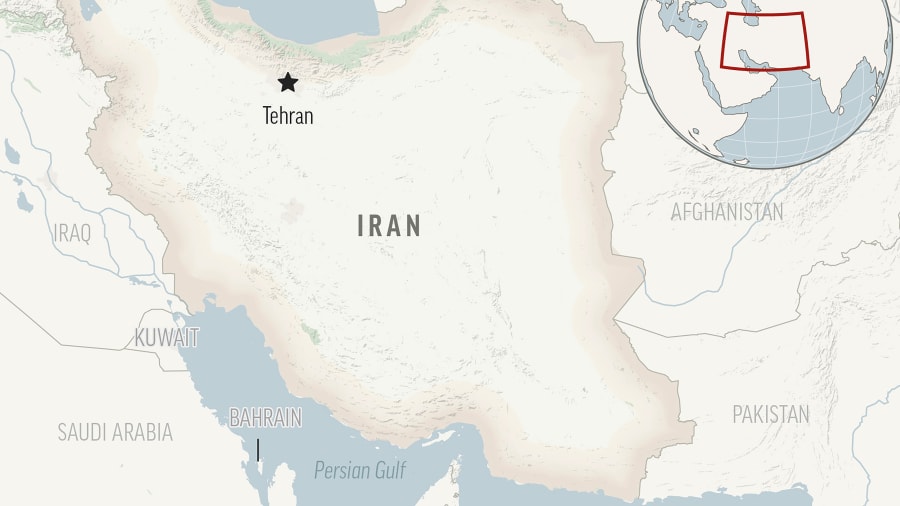
Bolton opposed this week's renewed Middle East peace talks, warning that failure would hurt Washington's influence in the region. He has assailed the administration's "policy chaos" in Afghanistan. And he has unabashedly called for a military strike on Iran's nuclear facilities while accusing the White House of leaving the U.S. defenseless by canceling missile defenses in Poland and the Czech Republic (the administration later announced a scaled-back defensive shield).
"Who's Going to Be Listening?"
That kind of tough talk thrills conservatives, including many on the far right. But do average voters really care about radar stations near Prague?
Political observers in two of the key early voting states say no.
"It's hard to see how 2012 would be anything other than a domestic race" focused on jobs and the economy, said Dennis Goldford, a Drake University political scientist and co-author of an updated edition of "The Iowa Precinct Caucuses: The Making of a Media Event."
Conservative Republican primary voters may like Bolton's ideas on foreign policy, said Andrew Smith, director of the Granite State Poll at the University of New Hampshire, but "the problem is, Who's going to be listening to that?" Few paid attention during the 2008 primary season when former New York City Mayor Rudy Giuliani tried -- and failed -- to parlay national security credentials earned after the 9/11 attacks into the GOP nomination for president.
Linda Fowler, a Dartmouth University political scientist and an expert on the New Hampshire primaries, said Bolton would confront the same challenges as former NATO commander Gen. Wesley Clark, who ran for the Democratic presidential nomination in 2004, and Senate Foreign Relations Committee veteran Richard Lugar, who campaigned for the GOP slot in 1996. Both "illustrate the difficulties of making such a bid," she said. Even though they were highly respected when they tested the presidential waters, "neither could get over the name recognition gap, excite donors or put together a coalition of activists in the early primaries."

The two biggest hurdles may be time and money.
"In the old days, when the primary season was less compressed, they might have been able to hang on long enough to build some momentum," Fowler said. Even with a slightly more spread-out calendar, time is tight, and "the likelihood that Bolton would run out of funds before he caught fire is pretty high," she said.
National Republican pollster Glen Bolger said "nobody would notice or care" if Bolton ran because he is unlikely to raise the minimum $30 million "price of admission" for a viable campaign.
"It's just really hard to see how you put together the kind of funding to get from essentially unknown to leapfrogging" the likes of Mitt Romney and Sarah Palin, Bolger said. "It's the longest of long shots."
At 61, the author of the aptly named U.N. memoir "Surrender Is Not an Option" may merely be trying to inject national security issues into the coming presidential debate. If so, he may have trouble finding space.
Republicans already have a muscular foreign policy advocate in Palin. Goldford notes there are plenty of candidates in a party where the battle is "between the right and the far right wing." Nor is it clear that GOP voters care about Bolton's signature issue. The most enthusiastic among them, members of the tea party movement, appear split at best and apathetic at worst when it comes to foreign policy.
Perhaps, said Fowler, Bolton is merely marking his turf as a possible vice presidential candidate. "If Palin or [former Arkansas Gov. Mike] Huckabee were the nominees, his foreign policy experience would be a real plus in the No. 2 spot," she said.
Bolton has other obstacles to overcome if he's serious about running:
-- No electoral experience. The Yale graduate may share an alma mater with five former presidents, but his only extended brush with presidential politics was the month he spent helping the last graduate win the controversial 2000 Florida recount.
The last time a non-politician was elected president was in 1952 -- Dwight D. Eisenhower. "That was an unusual case," Smith notes. "He was the guy who won World War II."
-- No domestic expertise. Bolton toes the Republican line of fiscal conservatism, calling Obama a "radical" for pushing through health care legislation, Wall Street regulation and the bailout of the auto industry. He chants the tea party mantra that government is too big. But in his Caller interview he seemed more preoccupied with foreign threats. "I understand the economy is in a ditch and people are concerned about it," he said, "but our adversaries overseas are not going to wait for us to get our economic house in order."
On social issues, though, Bolton is uncharacteristically nuanced. He opposes abortion rights but sees no problem with lifting the military's ban on openly gay service members. He also told the Caller that gay marriage is "going to happen," so why fight it?
-- Appearances. Has Bolton ever kissed a baby other than his own daughter? "He doesn't exactly have the common touch," said Larry Sabato, director of the University of Virginia's Center for Politics. "I could see him winning president of the faculty senate at some conservative colleges, but the GOP presidential nomination is a bit out of reach."
And then there is that bushy mustache. The last major presidential candidate to sport facial hair was Republican Thomas Dewey in 1948, and, except for an erroneous headline, that didn't go so well.
"John Bolton would provide an interesting voice in a Republican presidential debate," said Democratic strategist Paul Begala in a preview of likely party talking points. "He, of course, wants to invade countries -- lots of countries -- seeing Afghanistan and Iraq as a warm-up for bombing Iran. And then, who knows? Continue through the alphabet to Iceland and Ireland?"
On the plus side, Begala added, "Unlike Sarah Palin, he knows that Africa is not a country and that there's a good reason why there are two Koreas."