The noted economist spent most of his academic career at Cornell University. In 1977, President Jimmy Carter picked Kahn to head the federal Civil Aeronautics Board, which then strictly controlled the fares and routes flown by airlines. The choice was not accidental.
Kahn was Carter's choice to head the Council on Wage and Price Stability, earning him the nickname "inflation czar," even though he could do little to stem the double-digit inflation of the 1970s.
He is better remembered for his success in loosening government control of the air, rail and trucking industries.
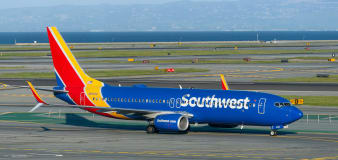
Before Kahn paved the way for Congress to deregulate air travel, it was an expensive luxury mostly reserved for well-heeled businessmen. Deregulation increased competition to bring down airfares and spur new low-cost carriers like Southwest.
But deregulation also led to financial ruin for some airline companies. Many declared bankruptcy. Others merged with their competitors.
Decades later, Kahn conceded that "the competition that deregulation brought certainly was terribly, terribly hard on the airlines and their unions, who had heretofore enjoyed the benefits of protection from competition under regulation."
Kahn was born Oct. 17, 1917, the son of Russian immigrants in Paterson, N.J. He earned bachelor's and master's degrees at New York University before finishing his Ph.D. at Yale University in 1942. He did short stints as an economist at the Brookings Institution, the federal government and Ripon College in Wisconsin before joining Cornell's faculty in 1947.
As he often admonished his staff: "If you can't explain what you're doing in plain English, you're probably doing something wrong."
Kahn is survived by his wife, Mary; three children; a nephew for whom he and his wife were legal guardians; eight grandchildren; and two great-grandchildren.