AOL News has a new home! The Huffington Post.

Click here to visit the new home of AOL News!

Hot on HuffPost:

See More Stories
Opinion

Opinion: The US Should Back Egypt's Democrats

Jan 26, 2011 – 5:07 PM
Text Size
Barbara Slavin

Barbara Slavin Contributor

While watching the State of the Union address Tuesday night, I thought of a young Syrian I met in 1999 when I visited that scenic but politically constricted nation.

I had been talking about upcoming U.S. presidential elections and complaining about lackluster candidates for both parties. The young Syrian looked at me and sighed. "If only we could elect a new president," he said.

Americans have the privilege of changing their leader peacefully every four years; most Arabs have had the same ruler -- or ruling family -- for their entire lifetimes. (In Syria, it's been the Assad family for more than four decades.) What has happened in Tunisia and what is happening now in Egypt -- and potentially other Arab states -- is the inevitable result of pressure-cooker regimes that block legal avenues for political change.

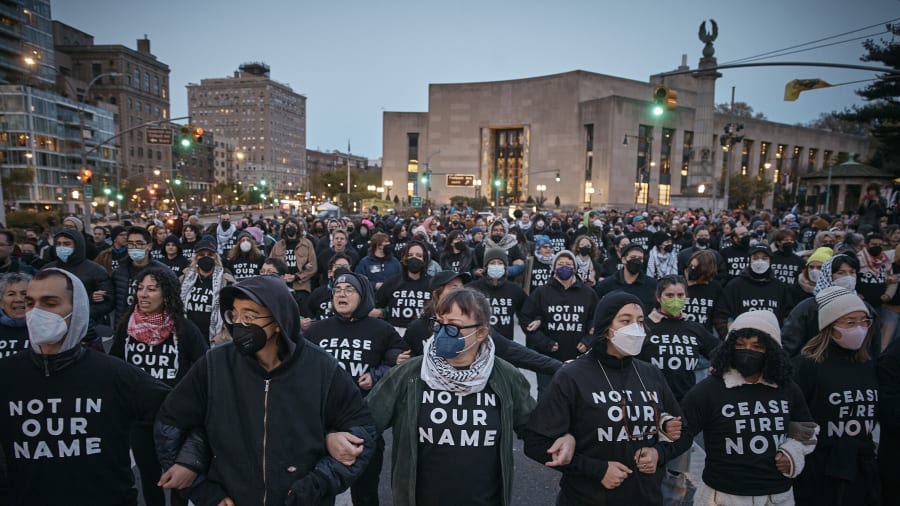
On Tuesday, at least 10,000 people crowded Egypt's Tahrir Square adjacent to the famed Egyptian museum and posh hotels for tourists. Other demonstrations took place across the nation. The protests were unprecedented in scale and political content, and showed that Egyptians are no longer the passive subjects they've been portrayed.

Scattered protests continued today despite government efforts to block communications through Facebook and Twitter and the arrest of hundreds of demonstrators. Egypt's massive security apparatus appears to have squelched large demonstrations for now, but the situation is far from stable.

Secretary of State Hillary Rodham Clinton seemed to acknowledge this today when, a day after calling Egypt's government "stable," she told reporters, "We urge the Egyptian authorities not to prevent peaceful protests or block communications, including on social media sites." She added in response to reporters' questions, "We are particularly hopeful that the Egyptian government will take this opportunity to implement political, economic and social reforms that will answer the legitimate interests of the Egyptian people."

Still, the Obama administration has carefully calibrated its public statements about a close U.S. ally. It should be even more forceful in private, urging the Egyptian government to permit a real contested presidential election this year. This means that 82-year-old President Hosni Mubarak -- in power since 1981 -- should not run for another term in elections scheduled for this fall and should not anoint his son, Gamal, as his successor.

Surely in a nation of more than 80 million people, there are two or three other individuals competent to serve as president. One possibility: Mohamed ElBaradei, the Nobel Peace Prize laureate and former head of the International Atomic Energy Agency who has been campaigning for civil and political rights in Egypt. Current Egyptian rules prevent him from being on the ballot this fall. They should be changed.

Sponsored Links
For years now, Egyptians have endured a suffocating political twilight similar to the late Brezhnev era in the old Soviet Union. It's not that Mubarak has been a complete failure. He's introduced modest economic reforms and maintained a cold peace with Israel. His government has cooperated with the U.S. in the "war on terrorism." But much of Egypt remains mired in poverty and ignorance. The people of Egypt are sick of Mubarak, and after 30 years they have every right to be.

A U.S. official, speaking to AOL News on condition of anonymity, acknowledged the impact of the freedom deficit in the Arab world. "You have to give people a mechanism for political participation," the official said. "Young people want to play a role in building their societies."

President Barack Obama often quotes Martin Luther King's comment that the "arc of history bends toward freedom." Americans, of all people, should be on the right side of history and support the aspirations of Egyptians for peaceful political change.
Filed under: Opinion, Arab World Unrest
Follow us on Facebook and Twitter.


2011 AOL Inc. All Rights Reserved.

ON FACEBOOK