AOL News has a new home! The Huffington Post.

Click here to visit the new home of AOL News!

Hot on HuffPost:

See More Stories
World

US Turns Up Pressure on Iran After Egypt Ousts Mubarak

Feb 11, 2011 – 6:02 PM
Text Size
Andrea Stone

Andrea Stone Senior Washington Correspondent

WASHINGTON -- The Obama administration sent a not-too-subtle message to Iran today that the uprising in Egypt that led to the ouster of President Hosni Mubarak could spread and reinvigorate demands for more freedom in Tehran.

In a speech in Louisville, Ky., Vice President Joe Biden called the events in Egypt "a pivotal moment in history" and said it was time to let the people of Iran speak out freely.
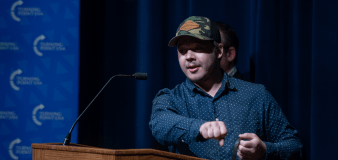
Iranian President Mahmoud Ahmadinejad (C) waves to supporters during a rally on Tehran's Azadi Square (Freedom Square) on February 11.
Atta Kenare, AFP / Getty Images
Iranian President Mahmoud Ahmadinejad, center, waves to supporters during a rally in Tehran's Azadi Square on Friday. He lashed out at the West and Israel in a speech marking the 32nd anniversary of the Islamic Revolution.
"I say to our Iranian friends: Let your people march, let your people speak, release your people from jail, let them have a voice!" Biden said to loud applause of the University of Kentucky.

Later, speaking in his last news conference as White House press secretary, Robert Gibbs read from his briefing book to say the Iranian government is "quite frankly scared of the will of its people" in light of the call for democracy in Egypt.

"The Iranian government should allow the Iranian people to exercise the very same right of peaceful assembly and the ability to communicate their desires," as was demonstrated over the last 18 days in Egypt, Gibbs said.

"This is a major shift," said Michael Rubin, an expert on domestic politics in Iran and resident scholar at the conservative American Enterprise Institute. "Two things are happening: The administration is starting to be proactive rather than reactive, and the White House may have realized that moral clarity is the new realism. We are in a proxy war for influence with Iran whether we like it or not, and if this freedom wave hits Iran, it will only benefit the situation in the Middle East."

"How can they say anything else given events in Cairo?" said Aaron David Miller, a veteran Middle East peace negotiator to six U.S. secretaries of state.

The statements from the White House were hardly accidental. Today is the 32nd anniversary of Islamic Revolution in Iran. Tens of thousands jammed Tehran's main square to celebrate. Some of them burned effigies of Mubarak.

President Mahmoud Ahmadinejad, speaking before Mubarak stepped down, drew comparisons between the protests in Egypt and Iran's 1979 revolution.

He said "a new Middle East is emerging." However, given his crackdown on Iran's failed "Green Revolution" after elections in June 2009, it is clear he did not mean to include his own country.

Opposition leaders are expected to rally in Iran on Monday, said Alan Elsner of The Israel Project, a pro-Israel public affairs group.

"We'll see what happens -- but the regime is well-prepared to crack down," Elsner said. "Iran's leaders obviously fear the Iranian people will rise up to demand the same freedom the Egyptian people have grasped. No doubt their brutal militias are on high alert."

Follow Andrea Stone on Twitter
Filed under: World, Politics, Barack Obama, AOL Original, Arab World Unrest
Follow us on Facebook and Twitter.


2011 AOL Inc. All Rights Reserved.

ON FACEBOOK