The 8.9-magnitude quake's epicenter was 231 miles northeast of Tokyo, the United States Geological Survey reported. But areas as far away as South America, Canada, Russia, Alaska and the entire U.S. West Coast were placed on tsunami alert as the ripples from the original quake spread out across the world.
Fearing a disaster, authorities in Hawaii ordered the evacuation of all coastal areas. In the tourist district of Waikiki, visitors were moved to higher floors of their hotels. Elsewhere, residents queued at stores and stocked up on emergency supplies, including gas, bottled water, canned food and generators. Thankfully, when the waves finally arrived, they had lost much of their force and size. A tsunami about 7 feet tall was recorded on Maui, and a wave at least 3 feet high was recorded on Oahu and Kauai.
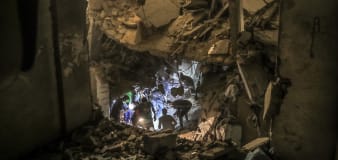
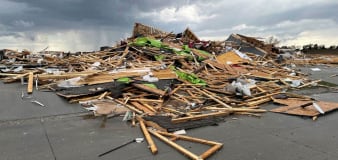
In Japan, however, the quake has wreaked destruction and death on an epic scale. The temblor, which occurred 15 miles below the surface, caused a 23-foot tsunami that rolled through coastal areas in Fukushima Prefecture, and a 13-foot tsunami in nearby Iwate Prefecture. Four other northern districts were also hit with similar-sized waves.
Fishing boats, cars and trucks were tossed about like toys by the swells, which sent debris crashing into bridges and apartment blocks. The power of the waves could be seen in the port of Hachinohe in Miyagi prefecture -- the region closest to the epicenter -- where two huge cargo vessels were ripped from their moorings and thrown on their side in the harbor wharf.
With vast swaths of the north either flooded or in ruins, it has been difficult for authorities to establish an accurate death toll. Japanese media reports suggest that at least 1,000 people have been killed, most of them drowned.
Casualties are especially high in the coastal city of Sendai in Miyagi, where police discovered up to 300 bodies washed up on a beach. Elsewhere in the prefecture, a ship carrying 100 people was swept away when the tsunami hit, according to reports on NHK television. The vessel's fate is currently unknown.
Tsunami Relief: Network for Good
Even in a nation accustomed to earthquakes, the scale of devastation in cities like Sendai has shocked locals. "A big area of Sendai ... is flooded. We are hearing that people who were evacuated are stranded," said Rie Sugimoto, a reporter for NHK television in Sendai, according to Reuters. "About 140 people, including children, were rushed to an elementary school and are on the rooftop, but they are surrounded by water and have nowhere else to go."
Fires have broken out across the quake zone. Storage tanks exploded at a 220,000-barrel-a-day oil refinery in the city of Chiba, near Tokyo, and flames ripped through the turbine building of Onagawa nuclear plant in Miyagi Prefecture. A state of emergency was also declared at a nuclear power station in Fukushima after its cooling system failed following the quake.
However, Prime Minister Naoto Kan told a press conference that no radiation leaks had been detected at Japan's nuclear power stations. The International Atomic Energy Agency echoed Kan's assurances in a statement Friday, reporting that "the four Japanese nuclear power plants closest to the quake have been safely shut down."
Many residents said they had never experienced such a powerful quake. "I was terrified, and I'm still frightened," Hidekatsu Hata, manager of a noodle restaurant in Tokyo's Akasaka area, told Reuters. "I've never experienced such a big quake before."
Office worker Jeffrey Balanag told the BBC that he was stuck in the Shiodome Sumitomo skyscraper in the center of the capital, because elevators had stopped working. "There's no panic, but we're almost seasick from the constant rolling of the building," he said.
The Mortgage Mess: Just How Many Screwups Were There?