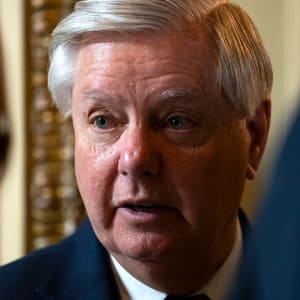
Abdelati Obeidi, Libya's deputy foreign minister and one of Gadhafi's most trusted aides, flew to Athens over the weekend to push that agenda through Greek Prime Minister George Papandreou.
It remained unclear, though, what guarantees the Libyan leader was seeking in exchange, such as assurances for his personal safety and commitments that he would not stand trial for waging brutal offensives against civilians.
"All we did, was listen to what Col. Gadhafi's envoy had to say," a senior foreign ministry official told AOL News on condition of anonymity because of his proximity to Sunday's talks between Obeidi and Papandreou.
Greek Foreign Minister Dimitris Droutsas attended the two-hour talks at a sprawling conference hall across from Papandreou's private residence in Kastri, a northern suburb of Athens. Droutsas said the Libyan government was "seeking a solution" but stressed that any talk of a political compromise had to begin with Tripoli's agreement to "an immediate cease-fire ... and full respect of United Nations Security Council resolutions."
Obeidi, who was whisked out of the conference center from a side entrance to avoid the press, made no comments. He is flying to Turkey today and then to Malta to shore up support for Gadhafi's overtures, officials said.
The diplomatic scramble comes after a report by The New York Times that two of Gadhafi's sons, Saif and Saadi, were proposing a compromise resolution where the Libyan leader would relinquish power to a new constitutional democracy.
Other reports said that the Libyan leader had approached former U.N. Secretary-General Kofi Annan, assuring him that his son would initiate political reforms during the transition period being negotiated.
Libya is currently divided between forces loyal to Gadhafi's regime and armed insurgents, who have been fighting to topple his government since revolts began in mid-February. A NATO-led coalition is enforcing a no-fly zone and other measures against Gadhafi's forces, who have been accused of attacking civilians.
That Gadhafi chose to reach out to the Greek prime minister as a potential peace broker is no surprise. Papandreou's father, a former prime minister, was among Gadhafi's closest allies in the 1980s -- a relationship that strongly angered Greece's European Union peers and the NATO allies.
Last year, the Greek prime minister rekindled that family friendship, talking to Tripoli and persuading Gadhafi to invest in Greece's broken economy.
On Monday, Libyan rebels of the Transitional National Council dashed hopes of a potential compromise, spurning proposals for an interim government under the supervision of Gadhafi's son.
"This is completely rejected by the council," its spokesman, Shamseddin Abdulmelah, said in the rebels' stronghold in Benghazi. "Gadhafi and his sons have to leave before any diplomatic negotiations can take place."

The Mortgage Mess: Just How Many Screwups Were There?