AOL News has a new home! The Huffington Post.

Click here to visit the new home of AOL News!

Hot on HuffPost:

See More Stories
World

Q&A: How Are the Taliban Linked to the Ancient Tribe the World Never Quite Conquers?

Apr 28, 2011 – 12:25 PM
Text Size
Dana Kennedy

Dana Kennedy Contributor

Just when NATO forces in Afghanistan thought the Taliban were finally less of a threat, they staged an astonishing comeback Monday when they broke about 488 of their colleagues, mostly fighters and commanders, out of a maximum-security prison.

Five days before the mass escape from Kandahar's Sarpoza prison, Defense Secretary Robert Gates spoke confidently of the gains U.S.-led forces had made against the Taliban and predicted they were about to "turn a corner" in driving them out of power for good.

Gates' optimistic remarks, followed by the prison break -- which was similar to an equally daring Taliban attack on a prison that freed up 900 prisoners in 2008 -- was the latest turn in the West's frustrating, nearly decade-long war in Afghanistan.

Taliban Q&A: The Ties to the Ancient Tribe the World Can Never Quite Conquer
Allauddin Khan, AP
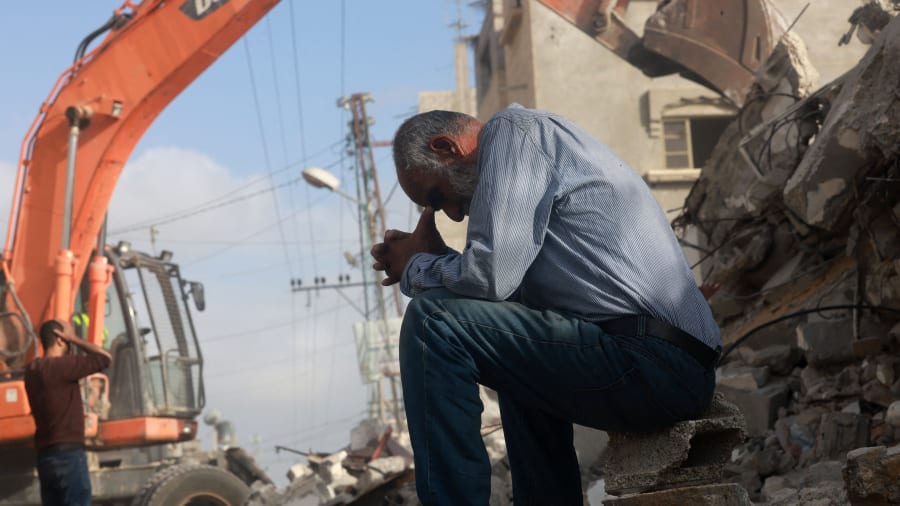
An Afghan policeman takes a look at the opening of a tunnel at the main prison in Kandahar, Afghanistan, that prisoners escaped through on Monday.
But was Monday's prison break just another example of the lengths to which a once-ragtag band of radical Islamist militants will go?

Or did the dramatic escape in Kandahar have its roots in the hard-fighting, mythic traditions of the legendary and ancient Pashtun tribe to which most of the Taliban belong?

The Pashtun, who date back at least to the third century BC, have been immortalized in song, story and poem (Rudyard Kipling) and grudgingly acknowledged as forces to be reckoned with by no less than Winston Churchill.

The British suffered a shocking defeat to Pashtuns in the 18th century. The Soviet Union left after a futile 10-year battle to control Afghanistan. Many historians have called the Pashtun the world's only unconquered tribe, although technically that's not true.

Pashtun make up the biggest ethnic group in Afghanistan, and there are plenty of Pashtun, like President Hamid Karzai, who oppose the Taliban.

Their tribal code, called Pashtunwali, has been equally romanticized. Its tenets to uphold rule and honor involve protecting to the death anyone who seeks refuge with you.

The Taliban are now a much bigger and more complex movement than the group formed in the aftermath of the 10-year war with the Soviet Union. There is now even a separate, Pakistani-led Taliban force.

But most Taliban are Pashtun, and the reports about their "reckless bravery" in the face of Soviet and NATO forces have echoes through centuries of Pashtun history and literature about them.

AOL News spoke about the Taliban, at least 65 of whom were re-captured after the recent break, and their Pashtun heritage with Dr. Amin Tarzi, the director of Middle East studies at the Marine Corps University in Quantico, Va., and the author of "The Taliban and the Crisis of Afghanistan."

Tarzi, a former U.S. Marine and the son of a Pashtun from the historic Tarzi family of Afghanistan, said these are his opinions and not those of the U.S. government.

AOL News: Pashtun are always described in larger-than-life terms, that they are fierce warriors and unconquered people yet very hospitable. What's true and what isn't?

Amin Tarzi: Some cliches are true. What I object to are adjectives like "warlike." It can be dangerous if the West relies too much on stereotypes. Pashtun means Afghan, don't forget that. The Pashtun are an ancient people, and like many from tribal backgrounds, they have narratives that go so far back they can't be proven. But these millennia of existence is why it's impossible to go in there and within a few years solve problems or control them. The Bonn agreement of 2001 made it seem as if the West could turn Afghanistan into Norway or France in four years. That was very naive.

AOL News: Where does the Pashtun reputation for being such fierce warriors come from?

Tarzi: A lot of that comes from the first interaction between the Pashtun kingdom and the arrival of the British in the form of trading companies in the 18th century. The British were able to pacify India, but when it came to Afghanistan, they couldn't.

AOL News: How did the Pashtun face down the mighty British?

Tarzi: It was a great shock to the British people. Here they were, conquering all, but they couldn't conquer the Pashtun. The British thought, who are these crazy vagabond people, these fierce warriors, these vicious but honorable men. The British described them as "noble savages." A lot of those cliches have stuck. The truth was that the Pashtun had always been more geographically isolated and hadn't had much contact with the outside world when the British arrived. They were very used to their independence. And they are strong fighters, no doubt about it.

AOL News: The Soviet Union turned tail and left Afghanistan in 1989 after 10 years there. How did that happen, and is the U.S. about to follow suit after its 10 years there?

Tarzi: You have to be very careful about drawing parallels between the Soviet Union and the U.S. in Afghanistan. The Soviets came in as a conquering force to protect the Communist regime. The Soviets lost in great part because there was a large international coalition -- even China, Israel, Egypt -- arrayed against their efforts there. It was the coalition that came up with the idea of a holy war, of Islamizing the Pashtuns against the atheist Communists.

AOL News: So you're saying the world planted the jihad seed and the Taliban are the blowback?

Tarzi: The legacy for us was the Islamification of Afghanistan.

AOL News: But weren't there many reports of amazing bravery shown by Afghan fighters against the Soviets? You were there during some of that time. What did you see?

Tarzi: Afghans are risk takers, no doubt about it. They showed an unusual bravery and tenacity fighting the 10-year battle against the Soviets. They were doing things on that battlefield that defied logic.

AOL News: What kinds of things?

Tarzi: They'd go stand right in front of a tank with [a rocket-propelled grenade] just so they could get a shot right into the tank. Knowing there was a 100 percent chance they'd be killed. They put their lives on the line to take that one shot. In the early days against the big modern Soviet army, they had very few weapons. They had no bodily protection; sometimes they were barefoot and had nothing more than dried mulberry to eat. The Russians talked about them, like who are these crazy people and where are they coming from?

Sponsored Links
AOL News: Where does that bravery come from?

Tarzi: Afghans are poor, but they have such a sense of pride. They talk about the mountains. They are so proud. Afghans have this warrior ethos. You can't deny that. This fierceness. It's why they'd walk up against a Soviet column with one rifle. The Soviets used napalm, land mines, poisoned their wells. It was an all-out war against a people very sparsely armed.

AOL News: Why do NATO forces seem to be fighting a losing battle there now themselves?

Tarzi: We are not losing yet; we are just not winning. We're not there to conquer Afghanistan. We went there after 9/11 to stop the spread of terrorism. All of NATO wants to come home. The problem is a lot of confusion over what we want in an endgame.

AOL News: Why couldn't the West truly subdue or get rid of the Taliban? Do you think the Pashtun toughness is partly the reason they're so hard to kill?

Tarzi: Well, in the last two years a lot of Taliban were killed. The idea was to hurt the Taliban and then from a position of power invite them to power-sharing. The (recent) prison break is a setback. We don't even have a list yet of who escaped. The Taliban are part of the system now and they have people in the system. In order to gain control and power, you need to have them pinned down. And we haven't been able to pin them down.
Filed under: World, Afghanistan
Follow us on Facebook and Twitter.


2011 AOL Inc. All Rights Reserved.

ON FACEBOOK