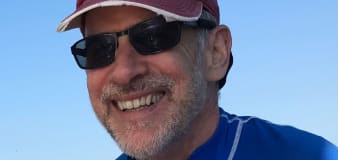
"We had calls from several different groups requesting we join them after the earthquake hit," Sean Henady, co-founder of 3 View, said in an interview with AOL News. "Because of our bylaws [it is not a self-deploying team], we could not just jump and go and had to get official authorization to proceed. Word got back to the minister of health, Alex Larsen, and he requested a face-to-face meeting with us."
What makes 3 View different are the tools it can bring to the scene -- aircraft equipped with high-resolution cameras, for example, and thermal-imaging equipment.
"Basically, we use advanced computer-assisted model airplanes [drones] and helicopters, as well as full-scale helicopters and airplanes," Henady said. "It just depends on the nature of the particular job. When we are using a drone, we can put the coordinates in, and they can go from one way-point to the next on autopilot, but the majority of the time we do a manual operation and keep it within our line of sight. The vehicle is not as important as the cameras that we equip them with."
During a search, Henady will fly the drone roughly 500 feet over a particular area of interest. The cameras take thousands of photos of the landscape and provide video images as well. The images are live-linked to a command center where Henady can see them as they are being captured.
In the event that Henady does not immediately recognize something, the images are then uploaded to a computer, where they are digitally enhanced, filtered and scrutinized to identify anything that looks out of place, such as a body or any other item they are looking for. All of the images are geo-referenced, so if Henady sees something later, he knows exactly where to find it.
"The primary focus of 3 View is to bring cutting-edge technology to agencies that don't have that type of tools or equipment available to them," said Mandy Albritton, co-founder of 3 View Search Services. "We are able to provide these to law enforcement agencies at no cost for looking for missing persons."
The journey that led to Henady and Albritton's organization started years ago.
"I started flying radio-controlled planes with my dad when I was really young, growing up in Indiana," Henady said. "That led to me competing across the country in model airplane and model helicopter contests. Later on, when I was about 20, I opened a hobby store. I owned that for almost 11 years, and that led to my interaction with Purdue University's aerial robotics program. From there, I began working with the military, test-flying drone planes for some military contracts."
Henady's accomplishments did not go unnoticed, and local law enforcement agencies began to approach him for help in locating marijuana fields.

"They wanted to know if I could help with a stealthy, inexpensive method for imaging illegal crops," Henady said. "We put together some drones with thermal cameras, and they were pretty impressed with the results. As a result, I was getting more exposure and more requests from various law enforcement agencies."
About eight years ago, Henady said, his life and his career took a dramatic turn, following a single late-night call from a local sheriff's department.
"They called me up in the middle of the night and wanted to know if my equipment could fly at night and if I had thermal cameras," Henady said. "I said yes, and then they asked if I would be willing to help on a missing person search. There was a suicidal lady who was missing, and they wanted to find her before she hurt herself. The department could not fly their own helicopter because their thermal camera was inoperative, and the local medivac helicopter would not fly because they didn't know if she had a weapon."
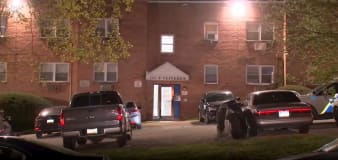
Henady agreed to help, packed up one of his remote-control helicopters and headed off to assist in the search.
"They had somewhat of an idea where she might be, so I started mapping those areas," Henady said. "We cleared three fields, so we knew for a fact she was not in those, but then we ran into a big problem."
Preoccupied with the search effort, Henady failed to pay attention to the helicopter's flight time, and it ran out of fuel in midair. The vehicle crashed, and a vital operational component was broken.
"I broke a $3 part but could not fix it in the middle of the night," Henady said. "So we came up with the idea of putting the cameras on long poles and started searching around."
While the poles were not ideal for the task, Henady's ingenuity paid off, and they were able to successfully locate the woman before sunrise. She was found alive, lying in a field. She had taken heavy doses of sleeping and pain medications along with a large quantity of alcohol in an attempt to kill herself.
"When I was driving home, I was pretty mad," Henady said. "I felt like I didn't do the job right, and to top it off, the lady we found was not grateful. She wanted us to leave her there. She was ticked off that we found her. So on my way home, I was pretty much fuming."
However, Henady's anger was quickly replaced with a great sadness that was brought on by the realization that the situation could have been far more tragic.
"It hit me pretty quick that if that was a child and we didn't do the job right, there could have been some serious consequences," Henady said. "I broke down there on the side of the road. It was a life-changing moment where I thought, 'You have to do the job right, get the tools right and learn how to interact with law enforcement.' From that point forward, I started taking search-and-rescue classes and improved my methods and tools."
Albritton experienced a series of similar life-changing events, albeit under slightly different circumstances.
"In 1997, I was very involved with organizations in my small Texas town," she said. "My husband owned the oldest business in town, and I was doing the typical boss's wife thing, serving on every board of directors and helping the community in any way I could."
The first change to occur in Albritton's life happened on April 3, 1997, when 12-year-old Laura Kate Smither went missing during a lone morning jog down her street.
"When I heard Laura had gone missing, I spoke with the police chief, who was a very good friend of mine, and offered my assistance," Albritton said. "I had worked as an event planner, so he asked me if I would help with the organization of a search. I had never done a missing person search before, but I figured, 'OK, this is an event on a zero timeline. We can do it.' And we did it."
The search, which at that time was the largest in history, with some 6,000 people volunteering, lasted 17 days. Laura was ultimately found, although not by a searcher.
"A man who was out walking his dog found her," Albritton said. "She was found 12 miles away from where she went missing. As most people know, you just take a round radius and go out and expand from there. The location she was found in was on our list of areas to check, but we had not gone out that far yet."
Laura's nude and decapitated body had been dumped in a retention pond in Pasadena. Forensic experts had to use dental records to make the official identification. No one has been charged with her murder.
"About four months later, I was contacted by Congressman Nick Lampson," Albritton said. "I was baking cookies when he called and offered me a job as director of a child safety program. I turned the job down because I felt as if my own children needed me more. I had already resumed my position in the community volunteering with the American Heart Association and Cub Scouts, and I didn't want to revisit that kind of pain again. I took Laura's death very personally. I felt like I had failed her family, the community and myself because we did not find her alive."
Two days after Lampson offered Albritton the job, another unforeseen event occurred, drawing Albritton into yet another missing person search.
"I got word that Jessica Lee Cain, an 18-year-old girl who lived nearby, went missing at a restaurant in Clear Lake, Texas," Albritton said. "Her family reached out to us -- the people who had looked for Laura -- to organize a search to look for her. It was during that search for Jessica that Congressman Lampson got out there in his jeans and went searching, beating the bushes for two days."
Jessica was never found, and her disappearance remains a mystery. The event caused Albritton to re-evaluate her life.
"After the search, Congressman Lampson approached me again and said, 'I want you to come work for me.' So I did, and it changed the course of my life from that day forward," she said. "I realized that there aren't enough people in the world that are standing up and fighting for missing people, other than those who have been directly affected. It's very rare to find someone who has devoted their life to the field like Sean and I have, without being personally affected."
Albritton's involvement in missing person cases ultimately led her to Florida in 2009, where the Caylee Anthony search was occurring. It was there that she first met Henady.
"We worked very well together on the search, but the more we became involved in the search effort for Caylee, the more frustrated we became," Albritton said. "We were frustrated with the methodology. We both felt that more advanced equipment and technology could have been utilized, more so than a ground-pounding effort. We also realized that the only way to accomplish that for future cases would be for us to create something of our own and make it a technology-based organization."
On Jan. 1, 2009, Henady and Albritton made that idea a reality and formed 3 View Search Services and 3 View Technologies.
"3 View Search Services is a 501(c)(3) nonprofit organization," Albritton said. "We do not charge the families anything at all for our work. We don't charge law enforcement either. We support the missing person searches using donations and sponsorships. 3 View Technologies is an engineering company that specializes in imaging and software. That is a for-profit company that researches design and manufactures search-related equipment to improve the industry. The tools are marketed to law enforcement, Homeland Security and other organizations. We also sell services to people in the inspection industry who do wind farm inspections, oil rig inspections, etc. Real estate agencies also hire us to do aerial photographs."
According to Albritton, a portion of the income received from the technologies company goes toward supporting their nonprofit search services.
"It is our hope that in the future, our 501 won't be dependent on charitable donations and will be self-funded," she said.
The board of directors in the search services portion of Henady and Albritton's companies boasts an impressive who's who of people involved in the search industry. Members include Lampson, water recovery specialist Stan Wallace, university professor Don Hale, K9 search and rescue trainer Donna Randolph, former congressional staffer Lori Mixson, Vietnam veteran and recovery specialist Len Wilson and Dr. Neal H. Haskell, a forensics and forensic entomology professor from Indiana's Saint Joseph's College.
The group hopes to change the way missing person searches are handled and to increase the percentage of successful finds.
"The most difficult part is not finding the person you are looking for," Albritton said. "In the U.S. only about 9 percent of people who go missing are ever recovered. Our goal is to increase those odds and provide families with some sort of closure."
Since 3 View Search Services was formed, the organization has been involved in several cases, including searches for Corrie Anderson, a missing mother of three from Jamestown, N.Y., and Mouy Tang, a young woman who disappeared from an adult care facility in September 2008. Those searches led to media attention for the group, which ultimately resulted in the request for them to come to Haiti following the catastrophic 7.0-magnitude earthquake that rocked the country Jan. 12.
"We had to cut through a lot of red tape, but we were finally able to meet with Haiti's Minister of Health Alex Larsen last week," Henady said. "He was hesitant at first because so many groups and foundations are coming out of the woodwork. They are trying to lock everything down and control what is coming in."
During the face-to-face meeting with Larsen, Henady showed him the type of resources that 3 View had and also offered to bring in food and medical supplies.
"At that point, they gave us written authorization to proceed," Henady said. "They want us to get back in as quickly as possible. Now we are back here getting everything mobilized and getting ready to head back down."
Henady said that he had the opportunity to tour parts of the country during his visit and that he was amazed by the utter devastation.
"It was terrible," he said. "We went to a six-story hospital that came straight down. It was totally pancaked. We went to the Hotel Montana, and it was completely wiped out. It was a brand-new building, and it's gone. Everywhere we went, there were bodies and people trapped underneath homes. They are digging large mass graves and dumping the victims in them. It's totally devastated, and even the government is saying, 'We have no more government; it is destroyed.'"
According to Henady, there are some 200,000 people missing in Port-au-Prince alone. In addition, much-needed supplies are not making it to the outskirts of the area.
"All the aid supplies and food rations are sitting on the tarmac," Henady said. "There is no infrastructure in place to distribute the supplies, so the majority of them are staying within a 30- to 40-block area."
Henady said the most difficult part of the trip was the pungent smell of death that permeates the air when you step off the plane.
"You can taste death in the air," he said. "The smell sticks to you everywhere you go."
Despite the horrific conditions, 3 View Search Services will be sending a small contingency to Haiti later this week to conduct some immediate imagery of locations where the government wants to put up tent cities. Later, it will organize an extended deployment to search for victims of the quake. That deployment is expected to last for up to one year.
Related Articles:
TV Drama Helps Family Find Missing Loved One
Missing Body Recovered by Texas Group, Its 107th